Image

Child Criminal Exploitation (CCE), requires a coordinated, preventative, and trauma-informed response. A Public Health Approach provides a strategic framework that addresses exploitation at multiple levels, and offers a practical and effective way to organise services and the pathway through them.
A Public Health Approach provides a strategic framework that addresses exploitation at multiple levels, and offers a practical and effective way to organise services and the pathway through them. It focuses on preventing exploitation before it happens, mitigating its impact at population level, identifying risks early, and supporting children and young people who have already been harmed.
This approach recognises CCE as a complex issue influenced by multiple factors across different levels of society. It shifts the focus from crisis response to prevention, early intervention, and recovery, ensuring children and young people are safeguarded, supported, and given the opportunity to thrive. It emphasises evidence-based interventions, data driven decision making, and a focus on population-level outcomes.
Level 1 – Universal Prevention and social development services
Level 2 – Support and therapeutic intervention for children and families in need
Level 3 – Therapeutic and support services for children and families with severe difficulties
Level 4 – Intensive and long- term support and protection for children and families
For practitioners who work in the child safeguarding system, the Hardiker levels will be familiar and will frame their work, in partnership with others, associated with assessment of need undertaken through the Understanding the Needs of Children in Northern Ireland (UNOCINI) process.
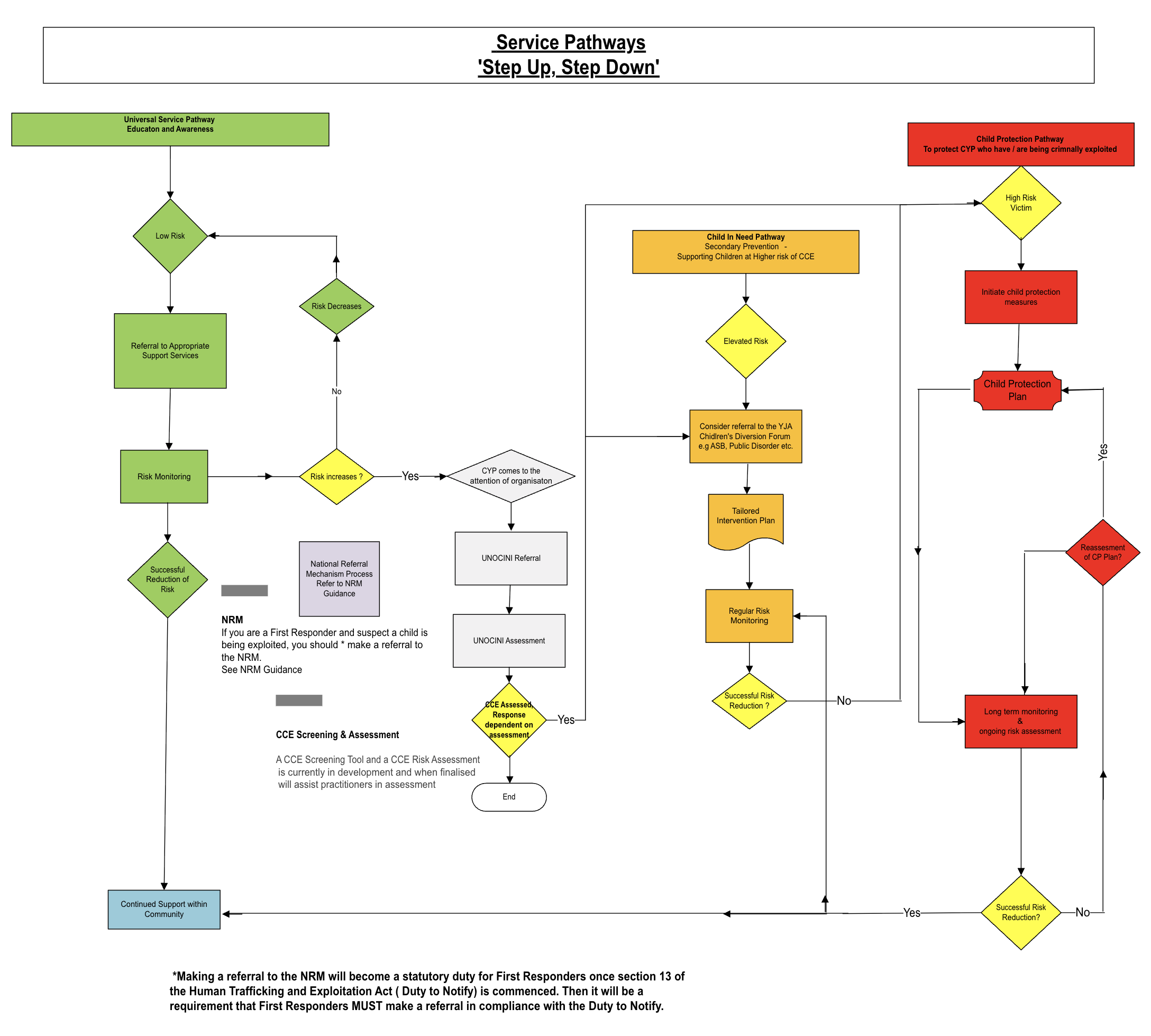
However, to simplify the service pathways workflow that practitioners will navigate in order to engage with the appropriate service pathways, it has been divided into 3 stages;
Provision of universal services with the aim of preventing CCE occurring
Provision of early intervention to support children and young people at risk of CCE and to prevent escalation
Activity to ensure the safety, support recovery, and provide long-term, holistic care of children and young people who have or are experiencing criminal exploitation.
Diagram 1 below depicts the service pathways that will be followed by practitioners based on assessed risk and need, to either prevent or support children and young people at risk of or experiencing CCE.
Practitioners may access the service pathway at different stages, recognising that children and young people affected by criminal exploitation may move between levels of support – ‘stepping up’ and ‘stepping down’ based on their changing risk and need.
Based on a sequential flow the following narrative describes how the service pathway is accessed and details examples of strategies that are relevant to each stage.
By capturing information across key domains, developmental needs, parenting capacity, and family/environmental factors UNOCINI enables practitioners to: